Openness of forms. Threatening to authority, beloved by artists
The hypocritical pretenses of so-called ‘real socialism’ led many people, especially those with professional or vocational aspirations, to try to improve society, in the belief that their seemingly utopian projects could become a reality. In spite of setbacks, their faith deepened and persisted because of their experiences that useful ideas could sometimes be successfully implemented. A centrally controlled system, in theory, had the potential to implement great ideas, even those difficult to achieve but beneficial to society. However, the reality of socialism often fell short of the ideal. Despite this, some artists were able to create enduring works through their genius and perseverance, and the innovative approaches used in these projects have kept them relevant and remembered, even if they were not fully realized.
Oskar Hansen (1922–2005) and Teresa Kruszewska (1927–2014) shared a commitment to their ideals, a refusal to compromise, and a determination to see their ideas through to fruition. This may have been influenced by their time at Warsaw’s Academy of Fine Arts, a place that encouraged creative experimentation. Even the constraints of the socialist system did not stifle the emergence of unconventional ideas. The relaxation of censorship and control following Stalin’s death also allowed more modern trends to enter Polish society. Abstract painting as well as freeform sculpture and design became popular, reflecting a wider desire for freedom and openness in both form and society.
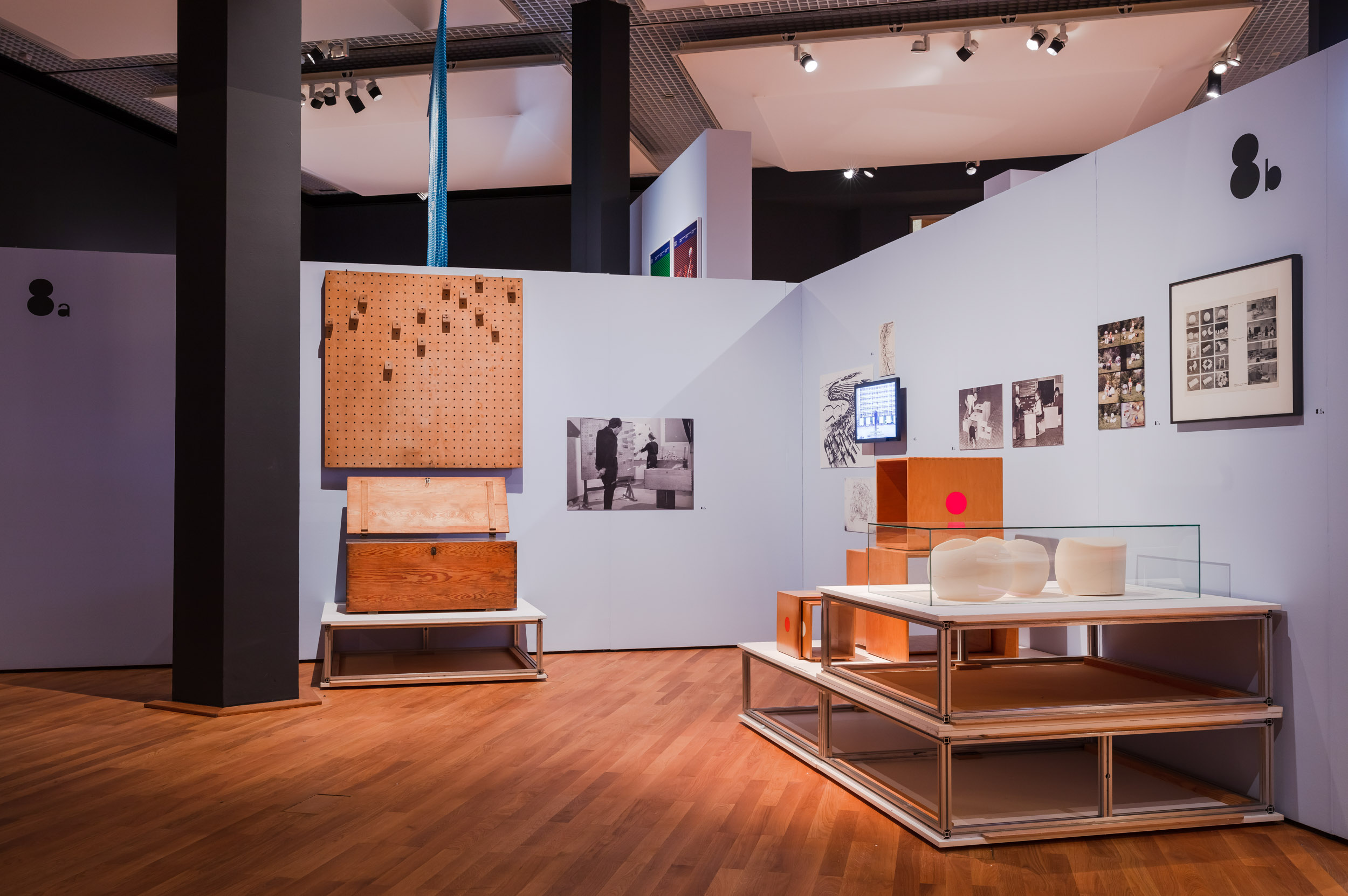
The openness of form in the work of Oskar Hansen and Teresa Kruszewska went beyond aesthetics, further enhancing the value of their creations. They embraced openness—a rejection of closure and a preference for modular systems that could be continually expanded—in Hansen’s architectural concepts and Kruszewska’s ‘furniture toys’. Hansen’s teaching methods included exercises with ‘apparatuses’ that helped students cultivate the imagination needed for creating multi-element open systems. Kruszewska gave children toys as tools to stimulate their creativity and encourage the exploration of shapes.
Countries: Poland
Tags: Architecture, Environmental design, Product design, System design